

5 Dog Myths Debunked!
When it comes to dogs, myths abound with gay abandon – from misinformation about health care and disposition to demeanour and intelligence. In this feature, we bust some common myths about dogs.
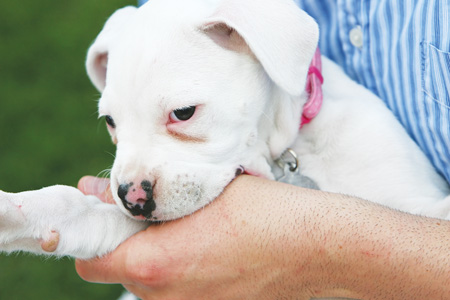 Myth 1: My dog knows when he’s done wrong. He looks guilty when I scold him.
Truth: Submissive displays like cowering or “looking guilty” have nothing to do with your dog “knowing that he’s done something wrong”. A lot of owners scold a dog well after it has committed its naughty act, arguing that the dog knows it did something wrong. Since a dog cannot associate praise or punishment with an action, unless it immediately follows the action, the poor animal has no idea why it is being scolded. The dog looks guilty because he is frightened of the owner’s aggressive behaviour and is trying to placate him using a display that, in a dog’s mind, should work. If you do want to scold your dog for any reason, make sure you do it only if you catch your dog ‘in the act’ and, even then, keep it short.
Myth 2: A dog will not bite the hand that feeds it.
Truth: Research actually shows that some types of dogs under certain sets of circumstances are more than likely to bite the hand that feeds it. A dominant dog is more likely to bite the family members it lives with and at the same time be extremely friendly with strangers. You need to understand that any dog is capable of biting, even if it has never bitten before. In the dog world, biting is a form of communication, and is not considered a betrayal of trust. A dog showered with love and delicious dog food will still bite if it has a behaviour problem or is teased, provoked, cornered or in pain. It would be best for all dog owners to keep in mind that a dog is programmed from birth to be a biter. It is up to the owner to carefully select, socialise, train and bring up the pup well so as to ensure that it never ‘needs’ to bite as an adult.
Myth 3: A dog that is barking or biting definitely has rabies.
Truth: A dog could be barking due to various reasons. According to Abodh Aras, the Chief Executive Officer of the Welfare of Stray Dogs, Mumbai, “a rabid animal cannot bark because of paralysis of certain muscles in the throat, and can only make a kind of strangled howling sound difficult to describe. Biting if provoked (e.g. by inflicting pain or frightening the animal) is unlikely to be caused by rabies; even irrational biting can be due to reasons other than rabies.” So, before you label a biting dog as rabid, think twice.
Myth 4: When dogs are mad at people, they do all kinds of spiteful things.
Truth: In the doggy world, there is no spite, revenge or grudges. What a dog views as perfectly normal behaviour is often misunderstood by the owner as bad behaviour. A dog owner would like to believe that a canine chews up a favourite pair of shoes because he is angry at being left alone, or chases the neighbour because he owns cats! In truth, the dog is probably frightened at being left alone and the shoes provide a comforting smell of the owner and as for chasing the neighbour, he is just being a dog and carrying out an innate instinct to chase a moving object! When a dog starts an undesirable behaviour, it is best for the owner to try to understand the source of this behaviour and then correct it.
Myth 5: The best way to toilet train a dog is to rub its nose in the mess.
Truth: It is deplorable that dog owners who adore their pets and spoil them silly will not hesitate to use this cruel method to toilet train their young pups. People who have used the ‘rub their noses in it method’ swear that it works because their dog got house-trained. The problem is that because the dog eventually learns to go outside, the owner believes that this method works. Rubbing a dog’s nose in his mess is barbaric and outdated. It not only teaches a dog to fear and distrust his owner, but in certain cases can also lead the dog to believe that he must eat his own mess. By using such harsh and obsolete practices while toilet training, an owner can unwittingly teach the dog not to go to the toilet in his presence, thereby making the job of toilet training much more difficult to accomplish.