Zoroastrian Feature In The Christmas Story
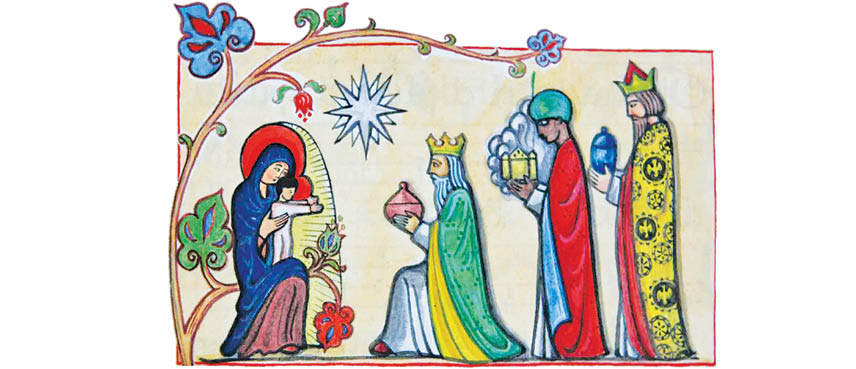
Christmas is here and it’s the season of joy and giving, and the story of the nativity and the probable Zoroastrian connection with the same. The Gospel of Matthew, the only one of the four Canonical Gospels to mention the ‘Magi’, states that they came “from the east” to pay respect to the one, “born King of the Jews.” Although the account does not indicate how many they were, the three gifts led to a widespread assumption that they were three in number.
But, who were the Magi and why were they present at the birth of Jesus? Most scholars tend to agree that the Magi were priests of the Zoroastrian religion, the only religion in the ancient world other than Judaism that worshipped one God.
The Magi are popularly referred to as ‘wise men’ and ‘kings’. The term Magi is the plural of Latin magus derived from Old Persian maguŝ. The Magi were considered a type of sacred scribes among the Jews, adept in divination and interpreting specified scriptures for hidden meanings. The Greek historian, Herodotus, wrote that Zoroastrian priests, Magi, were one of the Mede’s social classes and referred to them as a nomadic group of Shaman or spiritualist.
The Armenian Gospel of the Infancy provides names for the three Magi as Melchior, who reigned over the Persians; Balthazar, who reigned over the Indians and Gaspar, who reigned over the Arabians.
But, why were they present at the time of Christ’s birth? That remains a mystery. However, it is important to realize that at the time of Jesus, the borders of the Roman Empire were located just outside Palestine in the Jordanian desert, where the Parthian Empire began to rise. It is possible that the Magi were wandering about in that region at the time of Jesus’ birth’.
According to the New Testament, the ‘Magi’ or ‘Wise Men’ were also astrologers who saw a special star, followed it and found the child and presented him with gold, frankincense and myrrh. Early Christians saw significance in each: gold for the King, frankincense for divinity and myrrh for human nature.
The Magi are often depicted looking like Arabs. But, it must be remembered that for the first thousand years, the Magi were pictured correctly in all-white Persian attire. It is said that a Persian army once spared a Byzantine Church because of the fresco of the Magi on it. During the Middle-Ages, the Magi were portrayed-like all ancient people in the dress of the Period. The believed remains/ relics of the three Magi were brought to Constantinople by St. Helena, mother of Roman emperor Constantine the Great, then, later moved to Milan. In the 1100s, they became the property of Holy Roman Emperor Frederick Barbarossa. He gave them to the Archbishop of Cologne, Germany. A cathedral for the relics was built, where they still remain.