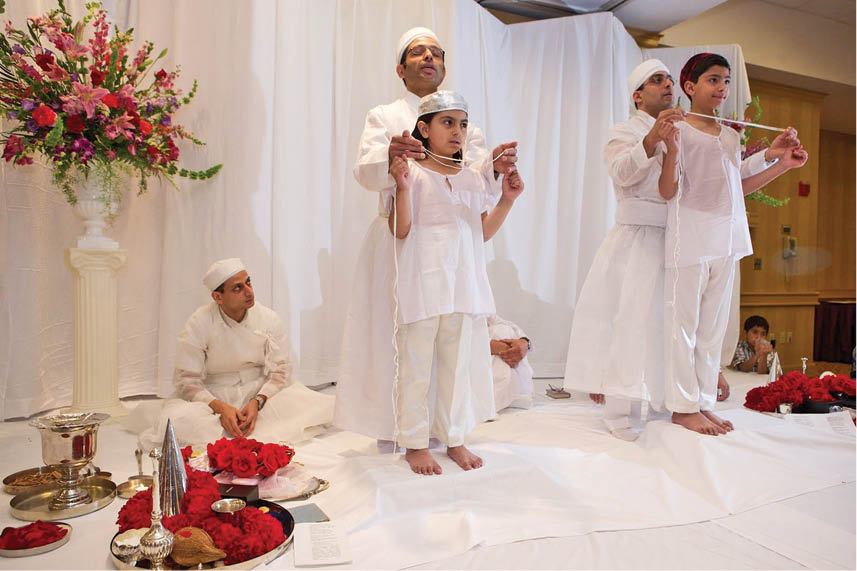
The Essence Of Navjote, Sudreh and Kusti
[otw_shortcode_info_box border_style=”bordered” css_class=”boxed”]PT Reporter Khushroo Mehta catches up with Panthaki of Panchgani Agiary, Er. Hoshang Bhandara on the nooks and intricacies of one of our religion’s most pious ceremony that stands the basis of terming someone as a true Zoroastrian – ‘The Navjote’.[/otw_shortcode_info_box]
.
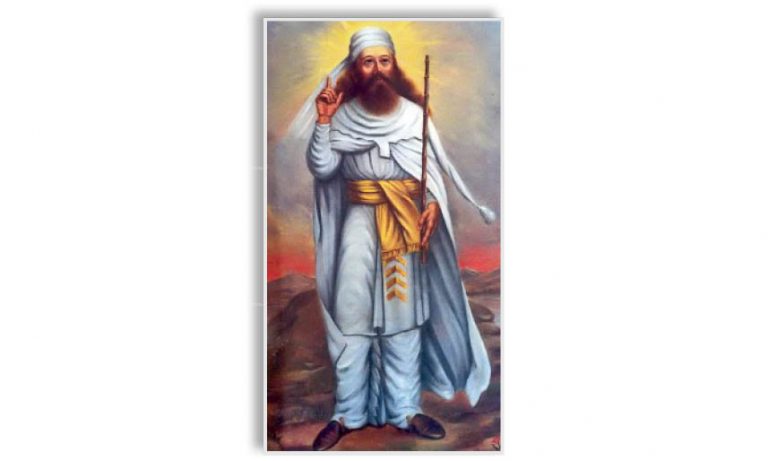
 The Navjote ceremony is when a Parsi child is formally taken into the Zoroastrian fold. The Navjote symbolises that the child acknowledges and accepts Zoroastrian religion, which has been handed down to mankind through holy Zarathustra. The Navjote ceremony is performed ideally between the age of 7 to 9 years, before a child attains manhood or womanhood.
PT: What is the importance of the ‘Nahn’ before Navjote? Why is Narang and Daram Nu Patru used for it?
Er. Hoshang: The entire Nahn ceremony is to purify the child’s body and soul as a pre-Navjote preparation. The child has to consume ‘Nirang’ – a very powerful drink that has been charged with prayers, and is used in numerous religious ceremonies for purification. Nirang purifies the body, so a child is made to not only consume it but also apply it on the body during the bath before Navjote. The Daram Nu Patru is sacred and pure, the child has to chew it and swallow its juice, which cleanses the soul of the child.
PT: Why is the Navjote always performed between sunrise and sunset?
Er. Hoshang: Preferably, the Navjote ceremony should be performed in the morning hours only, but these days, some people perform it in the evening too. In the olden days, the child whose Navjote had to be done, had to fast till the Navjote ceremony was over.
PT: Why is the Navjote No Sudreh always handstitched and not machine stitched?
Er. Hoshang: This is so because when a Zarthosti lady stitches the ‘Navjote No Sudreh’ by hand, she recites certain prayers all through the time that the sudreh (sadra) is being stitched. The sense and awareness of purity is connected to it, and so, even the lady who stitches it has to be pure in all senses.
PT: Why is the Kusti made of sheep’s wool and prepared with 72 strands?
Er. Hoshang: The ‘Kusti’ has to be woven from pure white sheep’s wool and while weaving the kusti into 72 strands, the Zarthosti lady has to recite certain prayers according to the 72 haphts [chapters] of Yashna. After this, certain prayers are further recited by a Mobed to further purify it.
PT: How must one perform the Kusti prayers post Navjote on a daily basis?
Er. Hoshang: After the Navjote, the Kusti prayers should be performed every morning on waking up from the bed, after washing face, etc. Kusti prayers should be performed again after bath, before every meal, after the time of attending to nature’s call and before going to bed. These are the essential times a Zarthosty should perform the kusti prayers. But in today’s modern world, it is not always possible to do it at all times. However, one should perform the kusti prayers as many times as he/she can.
PT: Why are the Sudreh and Kusti known as the armour of a Zoroastrian soul?
Er. Hoshang: When the child is formally taken into the Zoroastian faith, he is vested with the sacred Sudreh and Kusti. The sudreh is the symbol of purity and goodness. The Sudreh is the shield armor against all temptation and evil. The Sudreh protects the child in life and its gives divine help. The ‘Gareban’ of the sudreh is nearest to the heart, which keeps him spotless, shielding him against all evil and evil doers. With the Sudreh the child also wears the sacred kusti around the waist, three times to remind him constantly of our prophet’s three noble precepts – Manasni, Gavashni, Kunashni. This divine spark will guide and help the child in life. The four knots of the Kusti are symbolic of truth that prophet Zarathustra first brought into this world and the light and knowledge of Ahuramazda’s power, glory, wisdom and love. Our religion is based on purity in every aspect of life. Further, the four knots teach that only truth will be the armour of a Zoroastrian soul’s life.