Spectacular Spiti
 It was 5 am in the morning. It was raining. Daylight was breaking behind the mountains on the side of which our
cottage was perched. There was an urgency in our movements – we needed to hit the road as soon as possible to beat the tourist traffic which would start pouring in for the sightseeing trip upto the 3979 mts high Rohtang Pass. But we weren’t going to stop at the pass and experience our first sight of snow on the mountains as most tourists were.
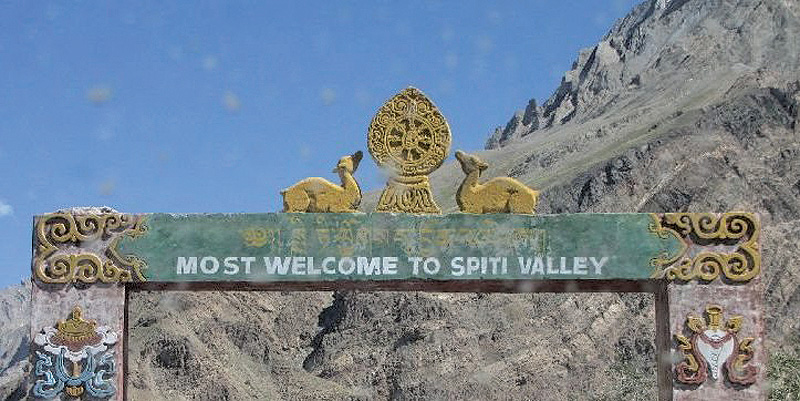
No, we were going beyond, into the relatively unknown, the as yet unspoilt, the pristine, the breathtakingly beautiful, the Shambhala land. We were going into Spiti Valley! This beautiful valley gets its name from the Spiti River, that carves its course into the ancient mountains, North and East of Himanchal Pradesh, bordering Tibet. We enter this valley as we cross the 4590 mts High Kunzum Pass, about 127 kms from Manali.
Access to this valley is cut off for nearly eight months in a year, due to snow at this high pass. An alternate route from the South, via Kinnaur, is also cut off periodically due to heavy rains and landslides, isolating Spiti valley… furthering the reason for it allure.
 Accessible between the months of May and August, this beautiful land calls out to the adventurous and the spiritual alike. The road descends from the Kumzum pass and meets the Spiti river at Losar, where we need to make an entry at the check post. From here, upto Khab, where the Spiti River meets the Sutlej River, lies 190 kms of pure paradise!
We first reach Kaza, the sub-divisional headquarters of the valley. Here we can visit the Ki Monastery and nearby Kibber, the highest, permanently inhabited village in the world. Further, the village of Tabo is home to the more than a thousand year old mystical Buddhist monastery. On the way, a detour takes one to the gravity defying, perched high on the eagles nest, Dhankar Monastery, a must see. Another detour further on the way to Sumdo, takes one to see the magically preserved, sitting mummy of a Buddhist monk. All these ancient mysteries are accompanied by the most fascinating natural vistas on our beautiful planet.
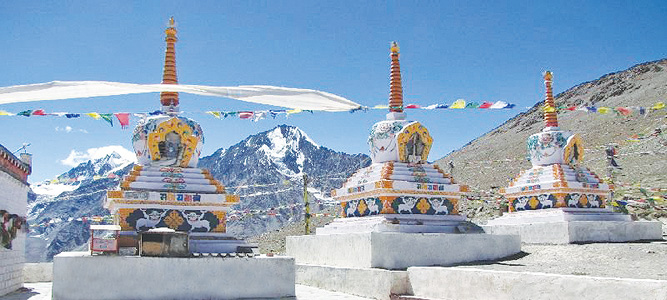
One finally reaches Nako for a well deserved rest. From here, we choose to continue onto the Kinnaur valley and to Shimla, despite a tempting call from the Chortens at Kunzum. Now words can hardly describe the land that Spiti is. I’ll let some pictures do the talking.
For the Traveler

• Distance to Destination: from Manali, Kaza is 200 kms
• Drive time: Upto 10 hours.
• Mode: MPV, SUV.
• Watch out for: Stark, awe inspiring landscape.
For more information and conducted trips Contact: mountainmonktravels@gmail.com
Photo Courtesy Narendra Agarwal