
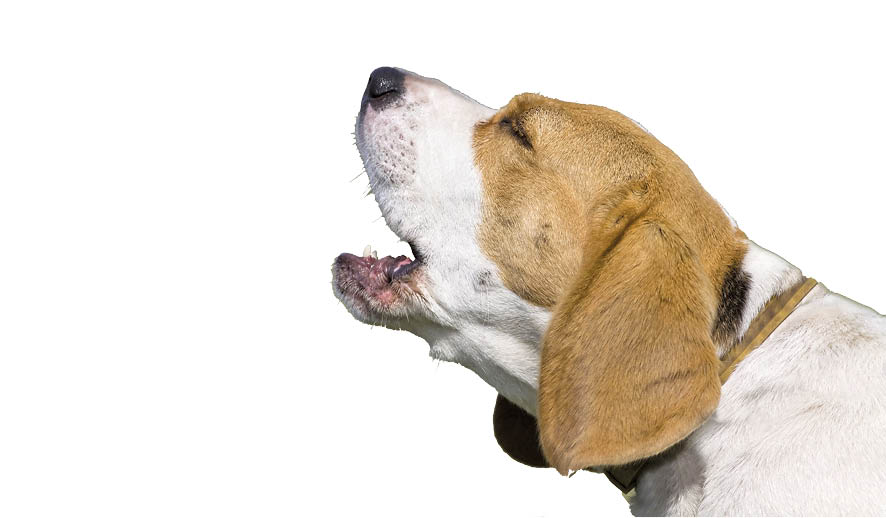
Hush Puppy!
“Arf! Woof! Awhhooo! Rrruff!” It’s 5 am and that wretched dog is at it again! Fuming you wonder what has triggered off the barking frenzy this time. But before you fling your pillow at him, stop and listen. Perhaps he is trying to tell you something. Dogs are social creatures and use barking as a form of communication. All the woofs, yaps and yips, which seem to be for no apparent reason, are your dog’s way of getting a message across. A natural and normal behaviour, barking becomes a problem when excessive. Here are some common barking problems and solutions:
 The Attention Seeking Barker:
Most dogs soon realise that barking is a great way to grab an owner’s attention. You need to spend quality time with your dog, walking him or playing with him, so that he doesn’t need to strive for your attention when you are otherwise occupied. What starts off with a small yap or two can quickly grow into a dog that barks endlessly till he gets attention – negative or positive – any will do. If your dog barks to get your attention, simply teach him that barking has the opposite effect. Instead of petting the dog, yelling at him or picking him up, ignore the dog – avoid eye contact and turn your back to him, till the barking stops. When he stops, you can gently praise him for being quiet.
The Alarm Barker:
It is perfectly normal for a dog to bark when someone is at the door. It’s their way of warning the intruder that he has been noticed and at the same time alerting the rest of the family that a stranger is approaching. Most owners want a dog that will notify them when a person comes to the door, but once the owner takes control, the dog should stop barking. The barking becomes a problem if the dog does not settle down after a few barks. To put it right, teach your dog to bark and be quiet on cue. To teach your dog to be quiet, wait till he is barking, then tell him “Shh…be quiet” in a soft voice and show him a treat. He has to stop barking to listen to you and sniff at the treat. Wait till he has completely stopped vocalising before you praise him and let him have the treat. Shouting at the dog when he is barking will have the opposite effect – he can think you are either joining him in scaring off the intruder or that you are competing with him, causing him to bark louder and harder.
The Nervous Barker:
A scared, nervous or anxious dog will bark at anything it perceives to be a threat. This perceived threat can be as diverse as humans with hats or falling leaves. Dogs go through critical periods of development roughly between six weeks to twenty weeks. During this period, the animal needs to be exposed to a wide variety of people, sights, sounds and smells. A dog that has little socialising during the critical period can grow up to be nervous when accosted by a new or novel experience. The animal soon learns to keep away the threat by barking at it. In this case, the bark is likely to be a shrill bark, intensifying as the threat approaches and easing off as the threat moves away from the dog. To curb this behaviour, you need to primarily step up on teaching your dog to be confident in different situations.
The Bored Barker:
A dog that is left alone all day or confined for long periods of time can take to barking as a way of relieving the boredom. The bark is a monotonous one that can go on for hours on end. Make sure your dog gets plenty of mental stimulation in the form of stuffed Kong toys and chews when you leave him alone. You should also exercise your dog before leaving him alone for extended periods of time.
The Alone-At-Home Barker:
Certain dogs are so attached to their owners that they will protest when left alone at home. If your dog falls into this category, you should teach it to tolerate and even enjoy your absence. Practice leaving your dog alone for small periods of time, gradually extending the time he is left alone. Give him a chew toy to occupy his mind. You should also try and remove the signals that let your dog know that you are going out so that he thinks you are always in. Make a list of things you do before and during the time you are about to go out. Everyday go through your going out routine but stay in the house or immediately return after closing the front door. You will also need to trick your dog into thinking you are still in the house by using the following tips:
Try leaving the radio or television on.
Leave an unwashed, recently worn item of your clothing just outside the door of the room that your dog is left in so that when he sniffs the bottom of the door he thinks you are on the other side.
This process take time, so do be patient. You will see results only after two weeks.
The Excited Barker:
It is perfectly normal for most animals to vocalise when excited. On the other hand, if your dog creates a din every time you take him for a walk or for a drive, or even if anyone comes over, it can become a bother. The next time your dog dances around you, barking for you to open the door, ignore the behaviour and wait with your hand on the door handle. Wait for him to quieten and calm down, or ask him to sit. Only when he stops barking and settles down should you open the door. Over time your dog will understand that barking slows down the process of going out, whereas sitting quietly, speeds it up.
Your dog may bark for a reason that doesn’t fall into any of the above categories. If you are unsure, consult a canine behaviour counsellor who can help you with the problem. Keep in mind that regardless of why a dog barks, your goal is to keep the barking in check, not to silence the dog completely. After all, a bark is as much a part of a dog as a wagging tail!