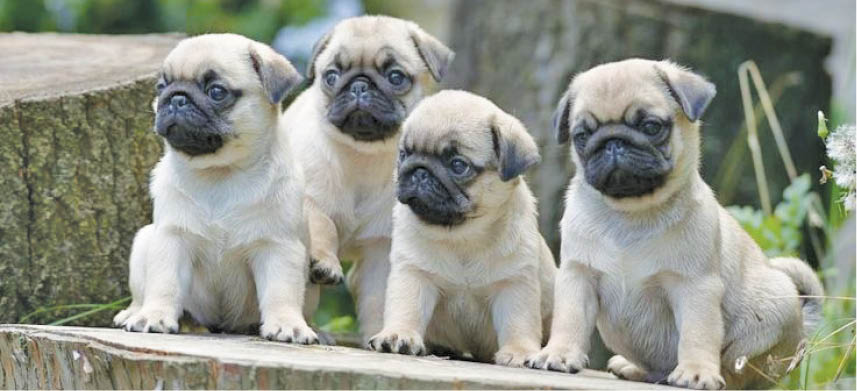
The Pug
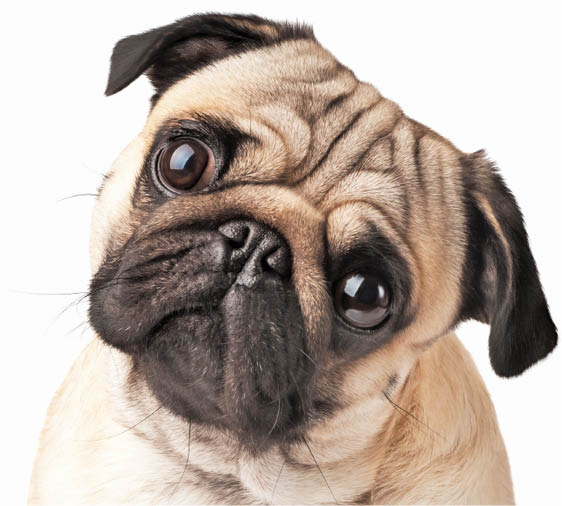 One of the oldest canine breeds on record (with accounts of Pug-like dogs dating as far back as 1000 B.C), the Pug traces its ancestry to ancient China. Considered a prized possession by the Chinese Emperors, this breed shared the special attention accorded to its courtly master.
It was in England that the name ‘Pug’ was given. The name is derived from the Latin word pugnus, meaning fist, because the dog’s face resembles a closed fist. The other theory is that the name may have originated from the dog’s resemblance to marmoset monkeys, which were called Pugs at that time. Wherever the name originated, it suits this short, yet grand dog.
 Appearance
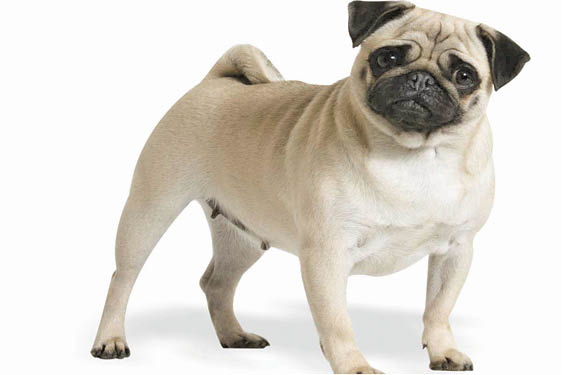
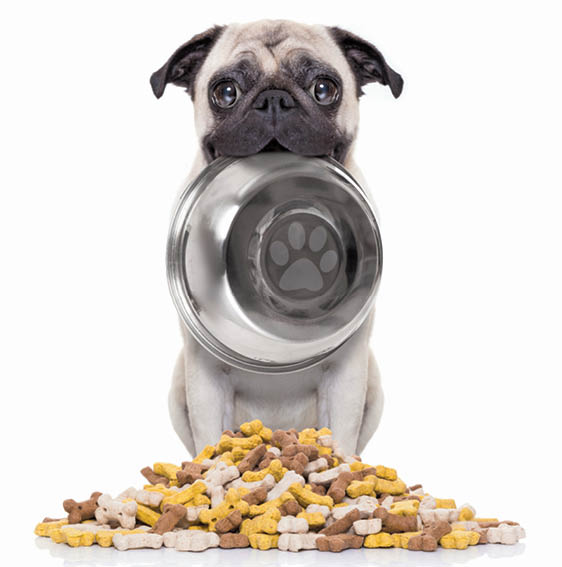
The breed standard states that a healthy Pug should be a picture of strength with hard muscles, straight legs and top-line and a purposeful gait with a slight roll. The short dog measures between 10 inches to 11 inches at the shoulder and has a large, round head with a square muzzle, prominent eyes and a wrinkled forehead. Its sleek, soft coat comes in apricot, black, fawn and silver with as dark a mask as possible.
Personality
Through centuries, the Pug was bred for companionship sake, and remains good at this. It’s easy-going disposition and friendly, affectionate nature makes it an ideal pet. The charismatic Pug has the heart of a canine many times its size! While Pugs are not generally aggressive, they do not tolerate manhandling. They are playful and genial companions to children who treat them well. A Pug demands attention and adoration, but returns both in greater measure. It hates to be left alone at home and can develop behaviour problems if left for long periods.
 Training
An intelligent dog, the Pug is easy to train. Known to have a stubborn streak, it should be trained at an early age using reward-based methods, as Pugs do not respond well to correction.
Health and Care
The small dog makes an ideal pet for a flat. Compared to many popular toy breeds, the Pug coat requires minimum fuss but needs to be brushed weekly. The dog’s facial wrinkles need special care and are easily prone to dermatitis if not cleaned regularly. Like most brachycephalic (snub-nosed) dogs, the Pug tends to overheat very quickly and exercise needs to be monitored. Due to its small size and intolerance towards exercise, the dog is prone to putting on weight – hence diet needs to be under constant scrutiny.
This breed, unfortunately, is predisposed to a variety of serious health conditions, including an overlong soft palate, an enlarged heart, entropion (an inversion of the eyelid), and dislocated kneecaps. A potential owner should think carefully before opting for this breed.
Grooming and Care
You may fall in love with the soft, round eyes and deep facial wrinkles of the Pug, but its unique characteristics necessitate a few important grooming and healthcare needs. A Pug’s facial wrinkles, which contribute to his singular appearance, are easily prone to dermatitis if they are not cleaned regularly. Clean the facial wrinkles on a daily basis and keep them dry. If you notice bald spots or a rash in your pug’s wrinkles, take him to the vet. The skin around the area where the tail constantly rubs on the dog’s back is also prone to problems.
Compared to many popular toy breeds, the Pug coat requires minimum fuss, but needs to be brushed weekly. However, their hair is notorious for weaving permanently into whatever fabric it lands on. Considering the dog is a consummate lap dog, this breed may not be for everyone. In spite of their stout appearance, Pugs are delicate and like to be treated gently – they are particularly sensitive to having their nails cut; it is essential for an owner to customise a young puppy to having its paws handled so as to pre-empt future problems.
Is A Pug Right For You?
A Pug is definitely not a dog that one should breed as a way to make money. The large head size of the puppies makes it difficult to give birth naturally and many have to have a caesarean. Often, this can lead to a female rejecting her pups, which then have to be hand raised. This makes the Pug one of the most expensive and time consuming dogs to breed.
Making sure you buy a Pug from a reputable breeder who will not breed dogs with genetic defects will minimise potential health problems. Because not all breeders are as conscientious as they should be, a buyer should ask the breeder who will be responsible for the vet bills if a Pug should be victimised by an obviously inherited condition later in life.
For a Pug, home is where the heart is and their hearts are with their masters. They make wonderful pets, but demand the same from you. If you are willing to take on the risks that come with this breed, then a Pug is right for you. Don’t get one for the kids to play with or because it looked good in an advertisement. All dogs need lots of love and care… and Pugs definitely need more.