Film Review: THE ZOOKEEPER’S WIFE
 What can you say of a Holocaust film where most of the tender moments and emotional scenes are not of the Holocaust or the prisoners sent off to execution camps, but of the zoo animals who share an intimate, warm and almost human relationship with their caretakers!
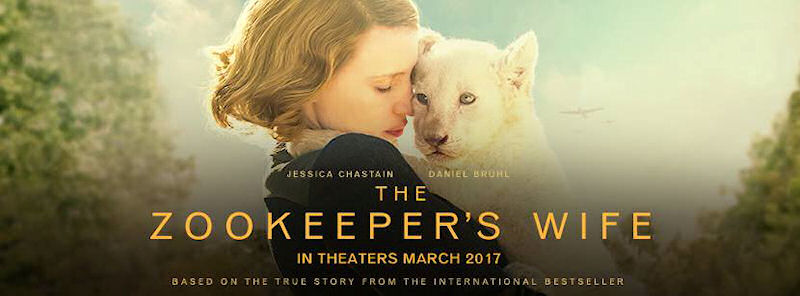
Dr. Jan Zabinski (Johan Heldenbergh) and his wife Antonina (Jessica Chastain) are in charge of the Warsaw zoo, where the inmates are like family; some even share the keepers’ bed. Even a domineering mother elephant will not stop Antonina from saving a newly-born calf from asphyxiation and reviving it.
Adapted from Diane Ackerson’s 2007 best-seller by the same name, The Zookeeper’s Wife is the historical account of Nazi Germany invading Poland on First September 1939 and its aftermath. And, as the title suggests, it is a Holocaust film told from a woman’s point of view. Also, gleanings from the protagonist Antonina’s diaries would mean that director Caro lays equal, if not more, emphasis on the callous treatment and slaughter of the furry and feathered friends as the planned murder of European Jewry.
When Dr. Lutz Heck (Daniel Bruhl) is appointed as the chief zoologist of the Reich, he starts exterminating some of the zoo inmates while dispatching the rest to Berlin, proffering the excuse of the animals not being able to survive the Warsaw winter—ultimately ordering the zoo to be closed down. The Zabinskis’ ruse of raising hogs in the zoo to provide meat for the German troops works. On the pretext of collecting garbage to feed the pigs, Jan picks up Jewish children from the ghetto and shelters them in the zoo premises.
Shot entirely in Prague, The Zookeeper’s Wife misses out on a splendid opportunity of being one of the great Holocaust films of all time. In a couple of instances, the progression of the narrative shows inherent flaws — for instance, Antonina is shown delivering a child without being shown pregnant. Though the direction is faultless, it’s the loose script which makes the film suffer. Johan Heldenbergh as Jan is cast well though a more cogent villain than Bruhl — who’s shown having more than a passing interest in Antonina—would have done wonders.
Though not exactly in the Schindler’s List league— in the sense that it neither haunts you nor tugs at your conscience — the Zabinskis saved more than 300 Jews by their sheer ingenuity and intent. Ultimately, it’s the four–legged wonders who end up being the scene-and-heart stealers!